Sorting
Source
Katalog zbiorów
(4)
Form of Work
Książki
(4)
Literatura faktu, eseje, publicystyka
(2)
Proza
(1)
Publikacje naukowe
(1)
Publikacje popularnonaukowe
(1)
Status
available
(4)
Branch
Dembowskiego 12 (W131)
(4)
Author
Grove, Andrew S. (1936-2016)
(1)
Jenkins, Simon (1943- )
(1)
Truss, Lynne (1955- )
(1)
Zuboff, Shoshana (1951- )
(1)
Year
2010 - 2019
(2)
2000 - 2009
(1)
1990 - 1999
(1)
Time Period of Creation
2001-
(3)
1989-2000
(1)
Country
United Kingdom
(4)
Language
English
(4)
Demographic Group
Literatura amerykańska
(2)
Literatura angielska
(2)
Subject
Big data
(1)
Czwarta rewolucja przemysłowa
(1)
Deanonimizacja
(1)
Globalizacja
(1)
Historia
(1)
Interpunkcja
(1)
Kapitalizm
(1)
Menedżerowie i menedżerki
(1)
Pisownia
(1)
Prognozy gospodarcze
(1)
Przedsiębiorczość
(1)
Przedsiębiorstwo międzynarodowe
(1)
Zarządzanie kryzysowe
(1)
Subject: time
2001-
(1)
Subject: place
Wielka Brytania
(1)
Genre/Form
Wydawnictwa popularne
(3)
Opracowanie
(2)
Pamiętniki i wspomnienia
(1)
Poradnik
(1)
Publicystyka
(1)
Domain
Gospodarka, ekonomia, finanse
(2)
Edukacja i pedagogika
(1)
Informatyka i technologie informacyjne
(1)
Językoznawstwo
(1)
Socjologia i społeczeństwo
(1)
Zarządzanie i marketing
(1)
4 results Filter
Book
In basket
Zawiera indeks (s. 203-210).
Under Andy Grove's leadership, Intel became the world's largest chip maker and one of the most admired companies in the world. In this volume, Grove reveals his strategy for measuring the nightmare moment every leader dreads – when massive change occurs and a company must, virtually overnight, adapt or fall by the wayside – in a new way. Grove calls such a moment a Strategic Inflection Point, which can be set off by almost anything: mega-competition, a change in regulations, or a seemingly modest change in technology. When a Strategic Inflection Point hits, the ordinary rules of business go out the window. Yet, managed right, this can be an opportunity to win in the marketplace and emerge stronger than ever. Grove underscores his message by examining his own record of success and failure, including how he navigated the events of the Pentium flaw, which threatened Intel's reputation in 1994, and how he has dealt with the explosions in growth of the Internet. The work of a lifetime, this is a classic of managerial and leadership skills.
This item is available in one branch. Expand information to see details.
Dembowskiego 12 (W131)
There are copies available to loan: sygn. 33 (1 egz.)
Book
In basket
Short History Of England / Simon Jenkins ; In association with National Trust. - London : Profile Books, 2011. - 384 strony : ilustracje kolorowe ; 26 cm.
Index na stronach 376-384.
From the invaders of the dark ages to today's coalition, one of Britain's most respected journalists, Simon Jenkins, weaves together a strong narrative with all the most important and interesting dates in a book that characteristically is as stylish as it is authoritative. There have been long synoptic histories of England but until now there has been no standard short work covering all significant events, themes and individuals. Published in association with the National Trust, and beautifully illustrated, this magisterial history will be the standard work for years to come.
This item is available in one branch. Expand information to see details.
Dembowskiego 12 (W131)
There are copies available to loan: sygn. 94(410) (1 egz.)
Book
In basket
A panda walks into a cafe. He orders a sandwich, eats it, then draws a gun and fires two shots in the air. "Why?" asks the confused waiter, as the panda makes towards the exit. The panda produces a badly punctuated wildlife manual and tosses it over his shoulder. "I'm a panda," he says, at the door. "Look it up." The waiter turns to the relevant entry and, sure enough, finds and explanation. "Panda. Large black-and-white bear-like mammal, native to China. Eats, shoots and leaves." So, punctuation really does matter, even if it is only occasionally a matter of life and death.
This item is available in one branch. Expand information to see details.
Dembowskiego 12 (W131)
There are copies available to loan: sygn. 81 (1 egz.)
Book
In basket
Index na stronach 665-691.
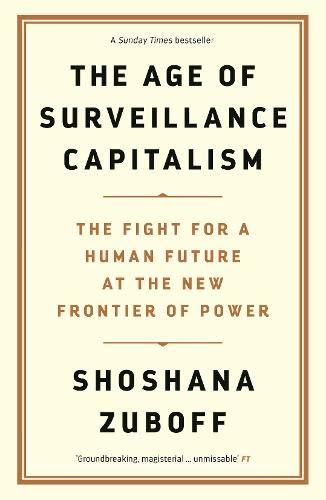
The challenges to humanity posed by the digital future, the first detailed examination of the unprecedented form of power called "surveillance capitalism," and the quest by powerful corporations to predict and control us. The heady optimism of the Internet's early days is gone. Technologies that were meant to liberate us have deepened inequality and stoked divisions. Tech companies gather our information online and sell it to the highest bidder, whether government or retailer. Profits now depend not only on predicting our behaviour but modifying it too. How will this fusion of capitalism and the digital shape our values and define our future? Shoshana Zuboff shows that we are at a crossroads. We still have the power to decide what kind of world we want to live in, and what we decide now will shape the rest of the century. Our choices: allow technology to enrich the few and impoverish the many, or harness it and distribute its benefits. The Age of Surveillance Capitalism is a deeply-reasoned examination of the threat of unprecedented power free from democratic oversight. As it explores this new capitalism's impact on society, politics, business, and technology, it exposes the struggles that will decide both the next chapter of capitalism and the meaning of information civilization. Most critically, it shows how we can protect ourselves and our communities and ensure we are the masters of the digital rather than its slaves.
This item is available in one branch. Expand information to see details.
Dembowskiego 12 (W131)
There are copies available to loan: sygn. 33 (1 egz.)
The item has been added to the basket. If you don't know what the basket is for, click here for details.
Do not show it again